

No products in the cart.
22
May
Sports Injury Physiotherapy: Practical Recovery Support for Pain, Movement, and Return to Daily Life
Sports injuries are not limited to professional athletes. In Ahmedabad, we often see college cricketers, marathon runners, gym users, school football players, office workers with weekend badminton strain, and even senior citizens with old ligament issues that flare up after a walk or a misstep. Good physiotherapy helps reduce pain, restore movement, and prevent the same injury from returning. If you are looking for structured recovery support, the Sports Injury physiotherapy service at A B Patel Diagnostics is designed around careful assessment, functional rehabilitation, and practical advice that fits Indian routines, work schedules, and family life.
Why Choose A B Patel Diagnostics for Sports Injury Physiotherapy
The first thing most patients want to know is simple: will this treatment be practical, safe, and worth the time? At A B Patel Diagnostics, the answer starts with experience and process. The center has served patients for 29+ years as a subsidiary of Biomedix (Gujarat) Pvt. Ltd., under the leadership of Dr. Utpal Patel, M.B.B.S from Bengaluru, with specialization in hospital and healthcare management. That combination matters because sports recovery is not just about exercises. It also depends on correct diagnosis, timely referral, and coordinated care.
Many people searching for a Sports Injury Physiotherapy Center in Paldi are not only dealing with pain. They may also need guidance on whether they require imaging, a cardiac fitness screen before resuming intense exercise, or a broader health review. This is where an integrated setup becomes useful. A runner with calf pain may need gait correction. A middle-aged patient with shoulder stiffness may also have diabetes affecting healing. A young football player with dizziness after training may need more than a basic muscle release session.
Patients from Surat, Vadodara, Mumbai, and even families visiting from Delhi often say the same thing: they want clear answers, not confusion. A mini success story comes to mind. A 32-year-old recreational tennis player from Paldi came in with repeated elbow pain. He had already tried rest, pain balm, and random online stretches. After a structured assessment, load modification, manual therapy, and progressive strengthening, he was able to return to tennis over the next few weeks without the same sharp flare-up. What helped was not one “magic” session, but a plan that matched his actual playing pattern.
For readers who want to understand broader rehabilitation benefits, the article on how physiotherapy transforms your health explains why structured treatment often improves not just pain but confidence in movement.
Our Sports Injury Physiotherapy Services and Capabilities
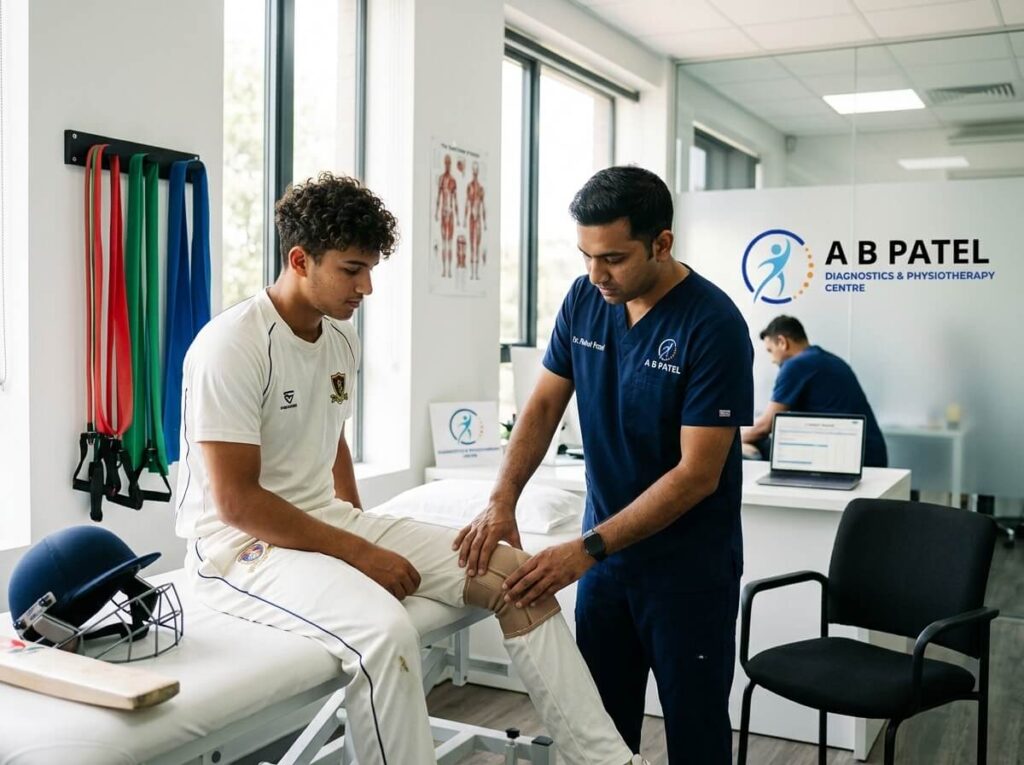
Yes, sports physiotherapy covers much more than post-match injury care. In real practice, patients come with sprains, muscle pulls, tendon pain, back strain, shoulder impingement, knee overload, ankle instability, post-fracture stiffness, and exercise-related overuse conditions. A B Patel Diagnostics supports assessment and treatment for common concerns such as Sports Injury Physiotherapy for back pain, neck strain after gym lifting, ligament recovery, posture-related strain, and return-to-activity planning.
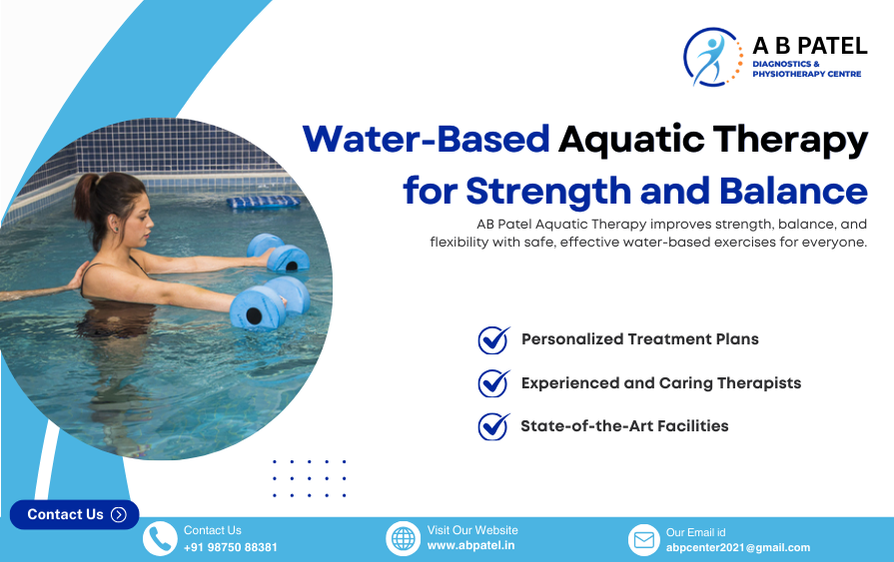
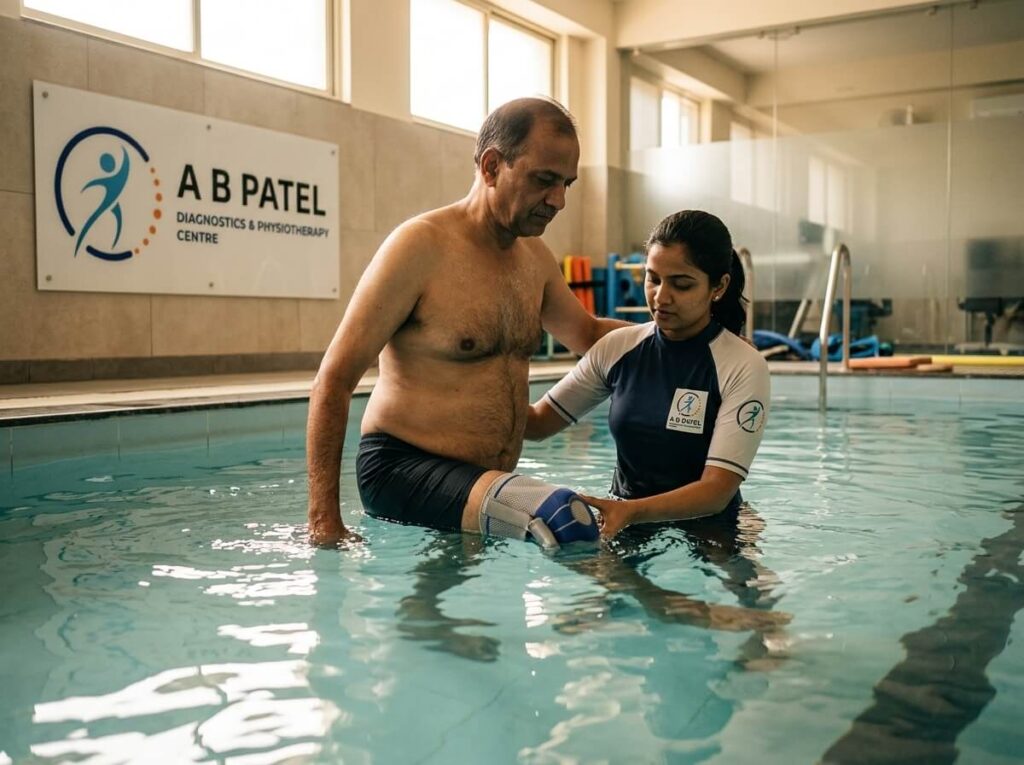
A useful strength in a clinical setup like this is access to related services when needed. Some patients require conditioning support through aquatic therapy, especially when land-based exercise is painful after knee or back injury. Water-supported movement can help people regain confidence early while reducing excess load on joints.
Others may not come for a “sports injury” in the usual sense, but their complaint still affects physical performance. For example, an amateur cyclist with chest uneasiness during exertion may need evaluation before resuming training. In such cases, services like TMT testing become relevant. This is especially important for adults returning to exercise after years of sedentary work.
We also see overlap with general diagnostic needs. Someone searching for a pathology lab in Ahmedabad, blood test lab near me, ECG test Ahmedabad, TMT test in Ahmedabad, digital X-ray Paldi, full body checkup Ahmedabad, or a health checkup package may actually be trying to solve a bigger health puzzle behind poor recovery, fatigue, repeated cramps, or delayed healing. Conditions like anemia, vitamin deficiency, blood sugar imbalance, thyroid changes, and inflammation can influence how fast a patient recovers from strain or overuse injury.
This is also why many families compare a standalone rehab room with a more complete diagnostic center Ahmedabad option. The difference is not marketing language; it is clinical convenience. When physiotherapy, testing, and guided follow-up are aligned, patients lose less time moving from one place to another.
If you want a local overview of treatment scope, the page on top physiotherapy center in Ahmedabad gives added context for what patients usually expect from modern rehabilitation care.
Get a Quote for [Sports Injury Physiotherapy]
Navigating Quality Standards and Accurate Diagnostics
The most common mistake after a sports injury is to treat every pain as “just a pull.” That approach delays recovery. Here’s what good quality care usually involves: a proper history, movement assessment, pain pattern review, activity analysis, and clear checkpoints for improvement. If pain is severe, recurring, or linked to swelling, weakness, numbness, breathlessness, or unexplained fatigue, further tests may be appropriate.
This is where accurate pathology reports and reliable screening matter. A patient recovering from muscle fatigue who also has low hemoglobin, uncontrolled sugar, or infection markers may not improve with exercise alone. In Indian cities like Bangalore, Hyderabad, Chennai, Pune, Kolkata, and Jaipur, patients increasingly look for centers that can connect rehabilitation with diagnostics in one workflow. That same need is very real in Ahmedabad too.
At A B Patel Diagnostics, the clinical value lies in combining physiotherapy care with access to diagnostic support when the case requires it. Some patients simply need rehabilitation. Others need a fuller picture. If you are also comparing report quality, turnaround, and testing support, the article on best pathology laboratory in Ahmedabad may help you understand what to look for in a reliable setup.
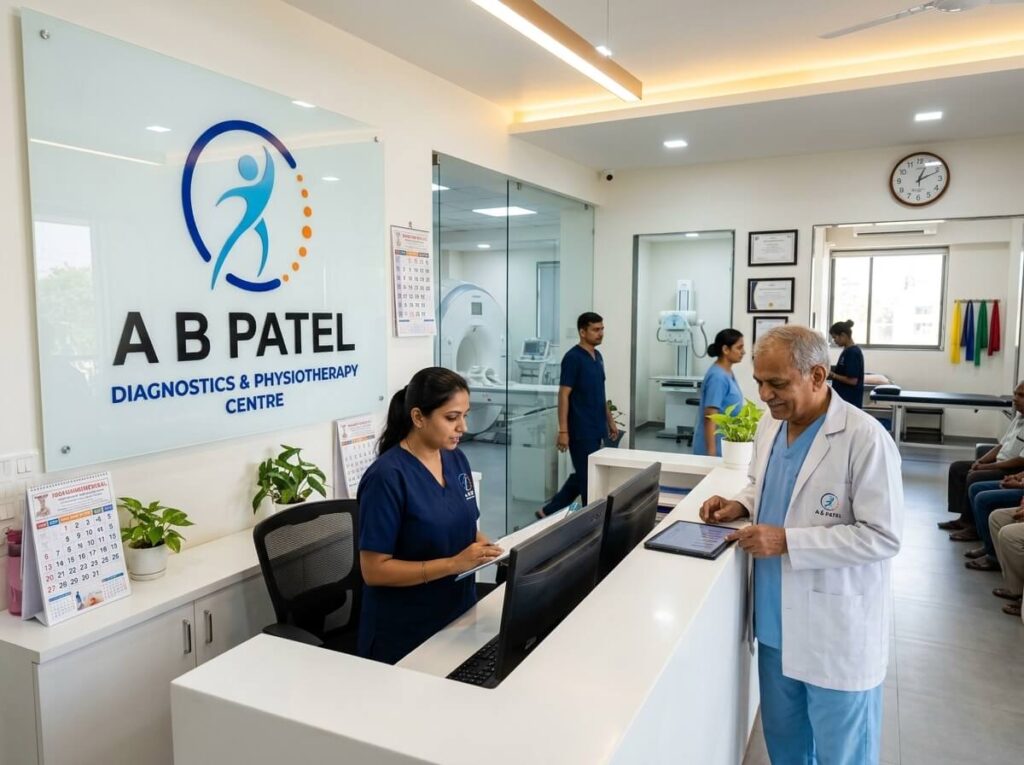
Local Centers vs A B Patel Diagnostics
The best comparison is not about claims. It is about what a patient can realistically expect during recovery.
| Comparison Point | Typical Local Center | A B Patel Diagnostics |
|---|---|---|
| Initial assessment | Often symptom-focused only | Structured review of pain, function, activity level, and recovery goals |
| Diagnostic support | Usually external referral needed | Access to integrated diagnostics when clinically required |
| Care continuity | May vary by therapist or visit | Coordinated approach supported by an established clinical setup |
| Patient profile handling | Mostly young injury cases | Suitable for athletes, working adults, older patients, and post-injury recovery cases |
| Clinical confidence | Depends heavily on individual provider | Backed by 29+ years of healthcare trust and multidisciplinary support |
Step-by-Step Process: How We Deliver Sports Injury Physiotherapy
Here’s how recovery usually works in a practical clinic setting.
First, the patient history is taken in detail. The therapist asks when the pain started, what movement causes it, whether swelling is present, and what the patient needs to return to: walking, office work, sport, stairs, or daily chores. A school athlete and a 58-year-old walker do not need the same plan.
Second, the physical assessment checks joint movement, muscle strength, painful actions, balance, and function. If needed, the patient may be guided to the home page or direct contact channels for coordinated next steps across services.
Third, early treatment focuses on pain control, movement restoration, and activity modification. This may include manual techniques, guided exercise, mobility work, posture correction, and advice on home care.
Fourth, progression begins. Once acute pain settles, strengthening and functional retraining become important. This stage prevents recurrence. It is often the difference between short-term relief and durable recovery.
Fifth, return-to-activity guidance is given. Patients are told when to restart walking, cycling, gym work, or sport, and what warning signs should not be ignored.
If you are ready to discuss symptoms, visit the contact page for appointments and care coordination. Many patients also ask for a Free Health Checkup Consultation, want to Download Full Body Checkup Cost Guide, or prefer a WhatsApp follow-up for convenience.
Real Patient Case Study
Yes, a realistic case shows how sports physiotherapy works better than theory alone. Consider “Rohan,” a 27-year-old software engineer from Paldi who played weekend cricket. He developed right knee pain after sudden sprinting between wickets. For two weeks, he continued playing, then stopped climbing stairs comfortably. There was no fracture, but the knee felt unstable during twisting.
At assessment, the pain pattern suggested overload around the knee with poor control during rotational movement. He was not a professional athlete, but his lifestyle mattered: long sitting hours, weak hip muscles, irregular warm-up, and weekend overexertion. His plan included pain-relief measures, hip and knee strengthening, step-control drills, balance work, and a graded return to running. Because he also reported unusual tiredness, a broader health review was advised. That kind of clinical thinking is where integrated care becomes useful.
Within three weeks, stair climbing improved. At six weeks, he returned to light cricket drills. At eight weeks, he resumed weekend play with workload advice and a warm-up routine he could actually follow. The key lesson was simple: recovery improved when treatment addressed both the injured area and the habits around it.
FAQs
1. What does sports injury physiotherapy actually treat?
It treats sprains, muscle pulls, tendon pain, ligament strain, back pain, knee pain, shoulder pain, ankle instability, and movement problems after injury or overuse.
2. Do I need physiotherapy if the pain is mild?
Yes, sometimes mild pain becomes a repeated injury if the root cause is poor movement, weakness, or overload.
3. How many sessions are usually needed?
It depends on the injury. Mild strain may improve in a few visits, while ligament or post-fracture recovery can need a longer program.
4. Can physiotherapy help without surgery?
Yes, many sports and activity-related injuries improve well with timely physiotherapy, exercise progression, and movement correction.
5. When should I get tests along with physiotherapy?
Tests may be needed if pain is persistent, swelling is unusual, recovery is delayed, or there are signs of fatigue, dizziness, weakness, or broader health concerns.
6. Is sports physiotherapy only for athletes?
No. Office workers, walkers, gym users, homemakers, students, and older adults often benefit from the same principles.
7. When can I return to sport or exercise?
Return depends on pain, strength, stability, and movement quality. A graded return is safer than jumping back in too early.
